Village Dental · Patient-centered care

Dental Sealants in Raleigh & Wake Forest

Extra protection for hard-to-clean grooves.

The chewing surfaces of back teeth have tiny grooves that can be difficult to keep clean. Village Dental helps teens and adults in Raleigh, North Raleigh, Brier Creek, and Wake Forest decide when sealants make sense as part of preventive care.

Older teen and parent smiling in a bright, welcoming dental setting
Illustrative image; not an actual patient or treatment result.

What are dental sealants?

Dental sealants are thin protective coatings placed over the pits and grooves of back teeth. They create a barrier that helps keep food and bacteria out of vulnerable chewing surfaces. For teens and adults with suitable teeth, sealants can add protection to a preventive care plan. An exam determines which teeth are appropriate.

Protect chewing grooves

Cover vulnerable surfaces that can trap food and plaque.

Keep the visit simple

Placement is typically quick and does not require drilling a sound tooth.

Support daily habits

Combine sealants with fluoride toothpaste, cleaning between teeth, and checkups.
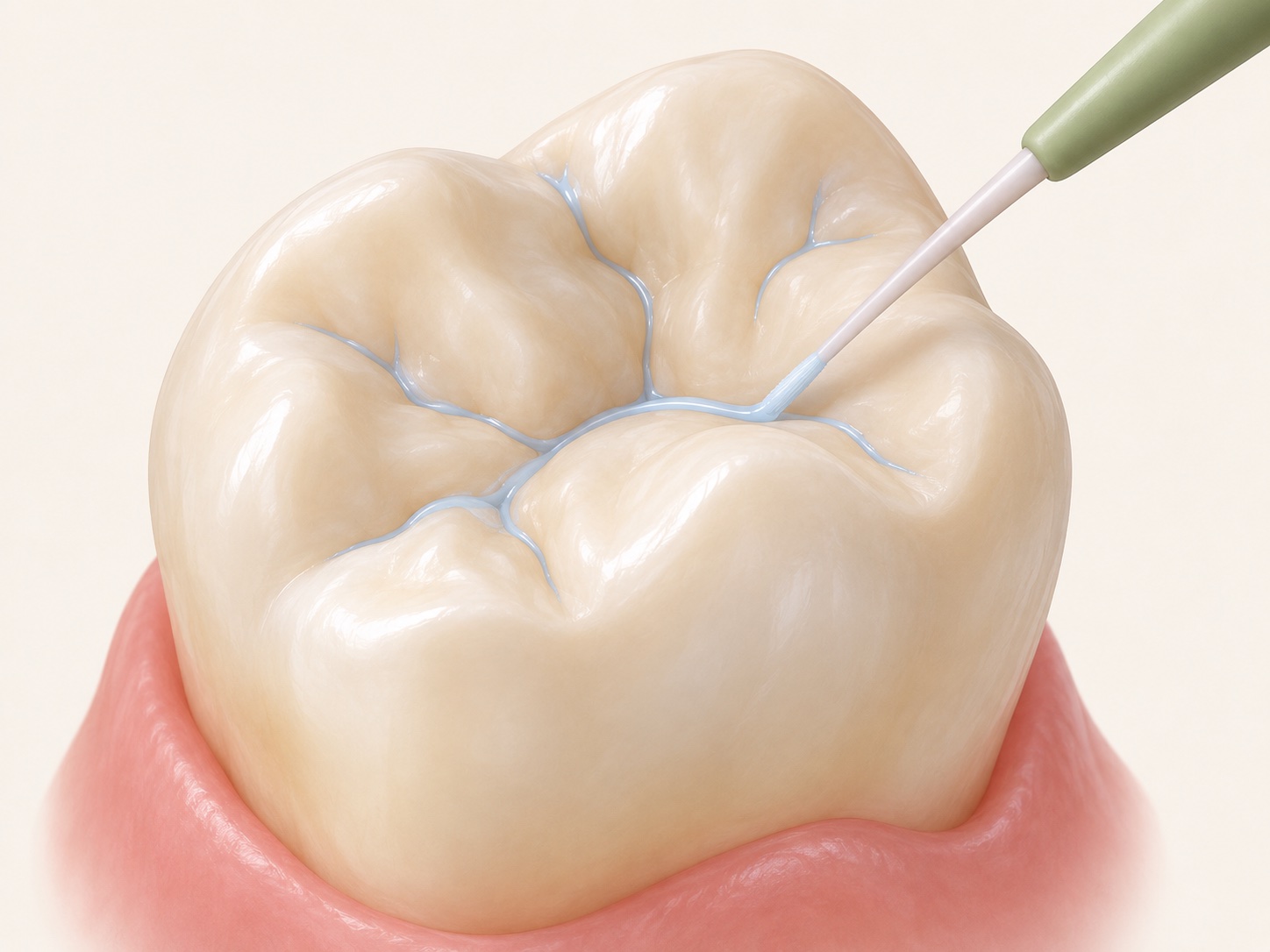
Illustration of a thin dental sealant being applied to the grooves of an adult molar
Illustration of sealant placed in the chewing grooves of a permanent molar. Color added for clarity.

Who may benefit from dental sealants?

Sealants are often placed when permanent molars come in, and suitable teeth can also benefit during the teen years and adulthood. Your dentist checks the chewing grooves, cavity history, and condition of each tooth before recommending a coating.

Village Dental does not typically see very young children. Our sealant information focuses on teens and adults. If you are booking for a child, contact your preferred office before scheduling so the team can confirm whether the patient’s age and care needs fit the practice.

How are sealants different from fillings?

A sealant is a preventive coating over a chewing surface. A filling restores tooth structure damaged by a cavity or another problem. A tooth with established decay may need a different approach; sealants are not a substitute for an examination or a recommended repair.

At your visit, ask which teeth are eligible, whether any areas need monitoring, and how the team will check the sealants at future appointments. This helps you understand both the immediate visit and the longer-term plan.

Your appointment

What to expect at your visit

1. Check and cleanEvaluate the tooth and clean the chewing surface.
2. Prepare and sealKeep the tooth dry, prepare the surface, and apply the protective coating.
3. Harden and reviewHarden the material as required, check the bite, and explain ongoing care.

What happens after sealants are placed?

Your team will check the bite and explain when normal eating can resume for the material used. Sealants can wear or chip and may need repair or replacement. They should be checked during routine dental exams.

Continue brushing with fluoride toothpaste and cleaning between the teeth. Sealants protect the covered grooves, but do not protect every surface or eliminate all cavity risk. Regular professional cleanings remain part of preventive care.

How much do dental sealants cost?

Cost depends on the number of teeth treated and the care included in the visit. Ask for a per-tooth estimate and discuss whether sealants can be planned with an upcoming exam or preventive appointment.

Insurance coverage can depend on the patient’s age, tooth type, and replacement rules. Confirm benefits and your expected portion with the office. Our insurance and payment information is a useful starting point for planning your family’s care.

Get to know your dental team

Why Village Dental?

Four neighborhood offices in Olde Raleigh, North Raleigh, Brier Creek, and Wake Forest.

Prevention for suitable teeth

An examination helps your dentist decide which chewing surfaces could benefit from sealants. Pair that conversation with regular preventive care, and confirm age suitability before booking for a child.

Care close to home

Raleigh, North Raleigh, Brier Creek & Wake Forest

Choose a convenient Village Dental office. When scheduling, confirm the appropriate clinician, treatment availability, and any consultation or referral needs.

Answers to common questions

Dental Sealants: FAQs

Does Village Dental offer sealants for children?
Village Dental does not typically see very young children. Contact your preferred office before booking for a child so the team can confirm age suitability and care needs. Teens and adults can also benefit from sealants when an examination shows their teeth are suitable.
Can adults get dental sealants?
Yes, some adults are candidates. Deep grooves, cavity risk, and the condition of the chewing surface help determine whether a sealant is appropriate. The decision is made tooth by tooth.
Do dental sealants hurt?
Placement on a sound tooth generally does not require drilling or numbing. The tooth is cleaned, prepared, and kept dry while the coating is applied and hardened.
How long do sealants last?
Sealants may protect teeth for several years, but they can wear or chip. Your dentist should check them at regular visits and recommend repair or replacement when needed.
Do sealants replace fluoride or brushing?
No. Sealants protect covered chewing grooves. Fluoride toothpaste, brushing, cleaning between teeth, and regular dental visits are still needed to protect the rest of the tooth and mouth.
Where can I ask about sealants in Raleigh or Wake Forest?
Contact Village Dental in Olde Raleigh, North Raleigh, Brier Creek, or Wake Forest for a preventive appointment. Teens and adults can ask about sealant eligibility; confirm age suitability with the office when booking for a younger patient.

Give cavity-prone grooves extra protection.

Choose a Village Dental office and ask whether dental sealants belong in your preventive care plan.

Olde Raleigh · North Raleigh · Brier Creek · Wake Forest