- Locations
- Our Dentists
- Services View all services →Preventive & GeneralImplants & Oral Surgery
- New Patients
- Smile Gallery
- Blog
- (919) 500-5722Book Online
Implants & Oral Surgery
Replace a missing tooth — root and crown — with a result that looks, feels and chews like your own. Planned with 3D imaging and placed in-house at all four Village Dental offices, no referrals needed.
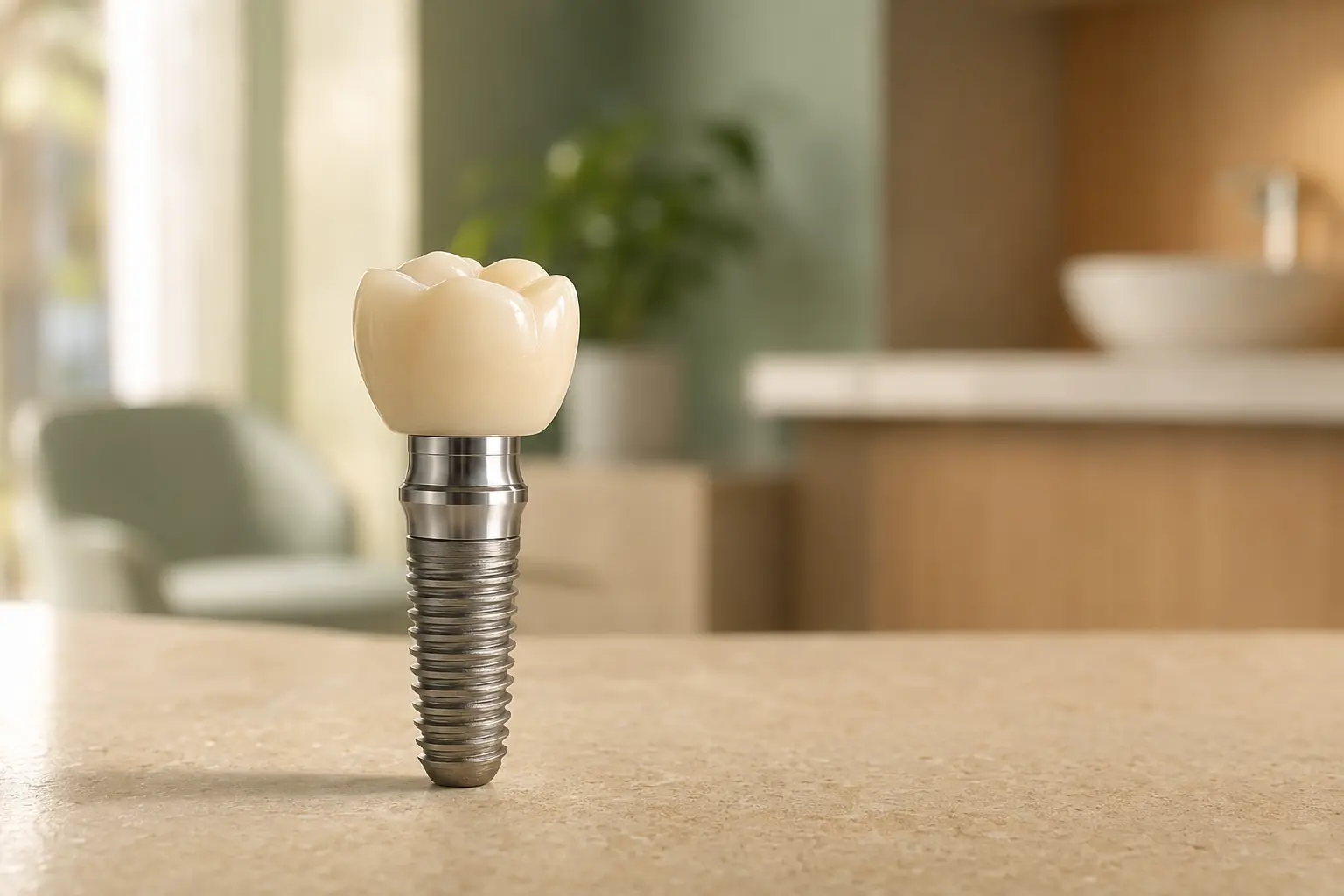
A dental implant is a small titanium post that replaces a missing tooth’s root, topped with a custom crown — the closest thing modern dentistry has to growing a new tooth.
A single-tooth implant supports its own crown without relying on neighboring teeth. As the implant integrates with your jawbone, it provides a foundation for the replacement tooth. Your exam helps determine whether an implant or another option is the better fit.
At Village Dental, the entire process happens under one roof. Your implant is planned on a 3D cone-beam scan, placed by the same team that restores it, and finished with a crown matched to your smile — one accountable team from consultation to final bite check.
The tooth replacement that behaves most like the real thing.
The crown is shaped and shaded to match your other teeth — most people can’t spot it.
A stable replacement tooth can help restore comfortable chewing after healing.
Implants can help reduce jawbone loss associated with missing teeth.
No grinding down healthy teeth for a bridge — the implant stands on its own.
Fixed in place — no adhesives, no clicking, no taking it out at night.
Implants are designed for long-term use, with ongoing cleaning, checkups and maintenance.
Start with an evaluation of your health, gums and jawbone.
Implants may be an option for adults with missing teeth, but age alone does not determine eligibility. Tell your dentist about medical conditions, medications and tobacco use, which can affect healing. An exam and imaging help assess the available bone and whether other treatment should come first.
If you have been missing a tooth for years, ask whether bone grafting is needed. The consultation is also a chance to discuss your priorities: eating comfortably, replacing a visible tooth or finding an alternative to a removable appliance.
From first scan to finished tooth — here’s how it works.
We take a cone-beam scan, review your health history, and confirm implants are right for you — including whether bone grafting is needed.
You leave with a clear plan and an exact all-in price before anything starts — no surprises mid-treatment.
The area is numbed for placement. If you are anxious, ask about sedation options; suitability depends on your health and treatment plan. Plan your return to work and activities with your dental team.
Over a few months the post fuses with your bone. Then we attach your custom crown and fine-tune the bite — and you’re done.
Feeling better after surgery and being ready for the final tooth are different milestones.
Bone healing around an implant can take several months or longer. Your schedule depends on your health, the procedure and whether additional treatment is needed. Ask when your final crown can be fitted and what you will use in the meantime.
Follow your team's instructions for eating, cleaning and activity after surgery. Once restored, implants still need daily care and regular dental visits. Contact your dentist if an implant feels loose or becomes painful. Surgery carries risks, including infection, injury to nearby structures and failure of the implant to integrate; discuss these before deciding.
Compare the complete treatment plan, not just the price of the post.
Ask whether the estimate includes imaging, placement, the abutment that connects the post to the crown, and the final crown. Confirm which follow-up visits are included.
Ask about any recommended extraction, bone graft, temporary tooth or sedation. Have the team explain which items apply to your situation before treatment begins.
Request a written estimate of insurance benefits and your expected share. Benefits vary by plan; ask how any membership savings apply to your proposed treatment.
An implant is one option, not the only one. Ask your dentist to compare an implant-supported tooth, a bridge and a removable denture for your situation. Useful questions include how each option is supported, how to clean it, how long treatment may take and what future maintenance could involve.
For independent patient information, see the American Dental Association's implant overview and the FDA's guide to dental implant benefits and risks.
Planned and placed in-house wherever home is — no outside referrals.
Book an implant consultation at the Village Dental office nearest you — 3D scan, honest answers, and an exact price in writing.
Book a Consultation