Shape the Tooth & Scan
After numbing the area, we shape the tooth so the new crown will fit perfectly over it. A digital intraoral scanner captures the tooth in seconds — no goopy impression material, no gagging.

When a tooth is too damaged for a filling, a crown caps it back to full strength. At Village Dental — Wake Forest, we use digital scans and tooth-colored ceramic crowns that fit precisely and look like the rest of your smile.
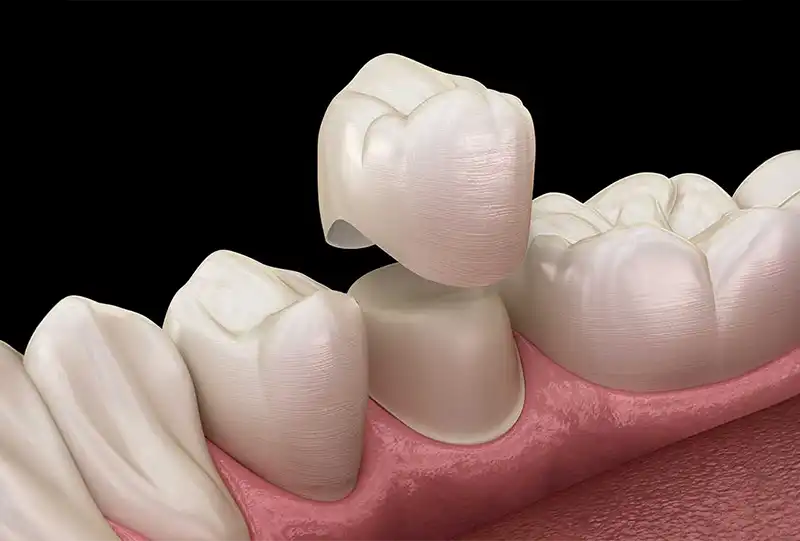
A crown is a custom cap that goes over a tooth that has too much damage for a regular filling. We shape what's left of the tooth, take a digital scan, and bond a tooth-colored ceramic crown over the top. Once it's in, the tooth chews and looks like every other tooth in your mouth — the difference is that the structure is now coming from porcelain or zirconia instead of cracked enamel.
People in Wake Forest end up needing a crown for a few predictable reasons. They bit into something hard at lunch and felt a back tooth split. An old silver filling from twenty years ago is finally giving out. The dentist saw a hairline crack on an X-ray before it became an emergency. Or — most commonly — they just had a root canal and the tooth needs to be capped before it splits under normal chewing pressure. We see all of these every week from patients in Wakefield, Heritage, Rolesville, and along the Capital Blvd corridor.
A crown is also what we use to finish a dental implant and to anchor a bridge when a tooth is missing. If your tooth is mostly healthy with just a chunk missing, an inlay or onlay can sometimes do the job with less drilling — we'll tell you straight up if that's the better call before we recommend a full crown.
Two visits, about two to three weeks apart. Comfortable, fully numbed, and predictable from start to finish.
After numbing the area, we shape the tooth so the new crown will fit perfectly over it. A digital intraoral scanner captures the tooth in seconds — no goopy impression material, no gagging.
A temporary crown protects the tooth while the lab fabricates your custom permanent crown. You'll leave eating normally — just avoid sticky foods like caramel and chewing gum on that side for now.
About two to three weeks later, you come back for a shorter visit. We pop off the temporary, check the fit and color of the permanent crown, and bond it permanently in place. You'll chew on it that day.
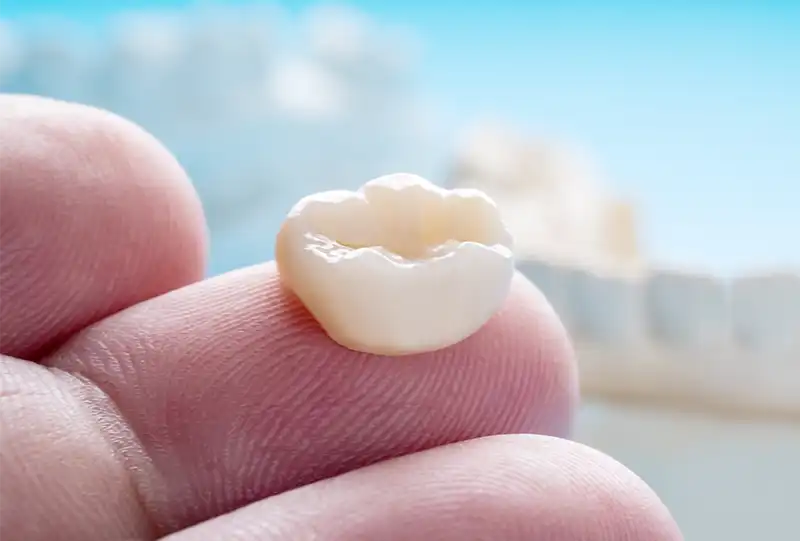
For most crowns we use either zirconia or lithium disilicate (commonly known by the brand name e.max) — both are all-ceramic, both are tooth-colored, and both are dramatically stronger than the porcelain-fused-to-metal crowns most adults remember from the 1990s. Zirconia is the workhorse for back molars where bite force is highest. Lithium disilicate has a slightly more lifelike translucency, which is why it's the usual pick for a crown on a front tooth or premolar that shows when you smile.
Before we shape anything, we use intraoral cameras and digital X-rays to show you the tooth on a screen — the crack line, the failing filling, whatever the issue actually is. For complex cases, like a tooth that may need a root canal first or a future implant, our 3D cone-beam imaging gives us a full view of the roots and bone so we can plan the right sequence of treatment instead of guessing.
A few practical notes for Wake Forest patients. We give you a written estimate up front — including your insurance coverage and any out-of-pocket — so there are no checkout surprises. We're a judgment-free office; if it's been six years since your last cleaning and you're embarrassed about a broken tooth, that's exactly what we're here for. And we keep same-day windows reserved daily for true emergencies — a crown that fell off, a tooth that broke before a flight, a kid who took an elbow at a Heritage High game.
Crown cost depends on which tooth, the material we use (zirconia vs. lithium disilicate vs. porcelain-fused-to-metal), and whether the tooth needs a build-up or a root canal first to be ready for the crown. Most major dental insurance plans cover a portion of crowns when they're medically necessary, which most are. We give you a written estimate before any work begins, including what your plan covers and what you'll owe out of pocket. Village Dental — Wake Forest is in-network with the major dental insurance providers below.




Please note: We do not accept Medicaid. If you're uninsured, ask about the Village Dental Membership Plan — it bundles your preventive visits and gives you a discount on additional treatment, including crowns and other restorative work.
New patients: Your first exam and X-rays are free. If a tooth has been bothering you and you've been putting off coming in, an exam is the easiest first step.
Right on the Capital Blvd / US-1 corridor — minutes from downtown Wake Forest and easy to reach from Wakefield, Heritage, and Rolesville. Same-day crown emergencies are often available when we have an opening.
Crown cost varies based on which tooth, the material (zirconia, porcelain-fused-to-metal, or all-ceramic), and whether a build-up or root canal is needed first. We give you a written estimate before any work begins, including what your insurance covers and what your out-of-pocket cost will be. We're in-network with Delta Dental Premier, Cigna PPO, BCBS Grid, and United Concordia Elite. Medicaid is not accepted. Call (919) 373-3520 for a quote.
Village Dental — Wake Forest, at 11480 Capital Blvd, Suite 115, holds same-day appointment windows daily for urgent cases like a broken tooth or a crown that fell off. The traditional crown process is two visits about two to three weeks apart, with a temporary crown in between. If the tooth is hurting or a piece broke off, call (919) 373-3520 first thing in the morning so we can fit you in.
Most crowns take two visits. The first appointment is about 60 to 90 minutes — the tooth is shaped, scanned, and a temporary crown is placed. The crown is fabricated at a dental lab over the next two to three weeks, then a shorter second visit, usually 30 to 45 minutes, cements the final crown in place. If a root canal is needed first, that adds one more visit beforehand. Call (919) 373-3520 to schedule.
Getting a crown is not painful. We numb the tooth and surrounding gum before any shaping is done, and most patients feel only pressure during the prep. The numbness wears off in a few hours, and there can be mild sensitivity for a day or two afterward. For patients who get anxious in a dental chair, we offer sedation options. Call (919) 373-3520 to ask about them.
Most dental insurance plans cover a portion of a crown when it's medically necessary — for example, after a root canal, on a cracked tooth, or to replace a failing large filling. We're in-network with Delta Dental Premier, Cigna PPO, Blue Cross Blue Shield Grid, and United Concordia Elite, and we verify benefits before treatment so the out-of-pocket cost is clear up front. We do not accept Medicaid. Call (919) 373-3520 with your insurance card handy for a benefit check.
It depends on how much tooth is left and what's damaged. A veneer covers only the front of a tooth and is purely cosmetic. An inlay or onlay replaces a missing chunk of a back tooth without capping the whole thing — a good middle option when the tooth is mostly healthy. A crown covers the entire tooth and is the right call when there's a crack, a large old filling, or a tooth that's had a root canal. We'll show you the tooth on an intraoral camera and walk through the options. Call (919) 373-3520 to be evaluated.
A well-made crown typically lasts 10 to 15 years, and many last 20 years or longer with good care. The crown itself doesn't get cavities, but the natural tooth underneath still can — which is why brushing, flossing under the crown margin, and regular cleanings every six months matter. Grinding and clenching shorten a crown's life, so a custom bite guard is often recommended for patients who grind. Call (919) 373-3520 if a crown feels loose or sensitive.
On back teeth, almost always yes. A tooth that's had a root canal is hollowed out and noticeably more brittle than a healthy tooth, which makes it prone to splitting under normal chewing pressure — and a split tooth often can't be saved. A crown caps the tooth and distributes the bite force evenly so it holds up. On front teeth with minimal damage, a crown is sometimes optional. We'll give you a straight answer based on the tooth itself, not a one-size-fits-all rule. Call (919) 373-3520 to be seen.
Yes. Village Dental — Wake Forest is at 11480 Capital Blvd, Suite 115, right on the Capital Blvd / US-1 corridor and a short drive from Wakefield Plantation, Heritage, Rolesville, and North Raleigh. We handle crowns, post-root-canal restorations, and crown replacements daily. Call (919) 373-3520 or schedule online to be seen.
Often yes. If the crown is intact and the underlying tooth isn't decayed or fractured, we can usually clean it up and re-cement the same crown in a single short visit. If the tooth underneath has new decay or has broken further, a new crown will be needed. Either way, don't glue it back on at home and don't chew on that side. Bring the crown in a small container and call (919) 373-3520 the same day if possible.