Talk & Examine
We start with what you've been noticing — jaw soreness, sensitivity, a clicking joint — then check your teeth and bite for the wear patterns that point to grinding. If your symptoms lean toward TMJ, we cover that too.
Custom night guards, TMJ splints, and sports mouthguards, made from a digital scan so they actually fit. Village Dental makes bite guards at all four of our Raleigh-area offices — Olde Raleigh, North Raleigh, Brier Creek, and Wake Forest.
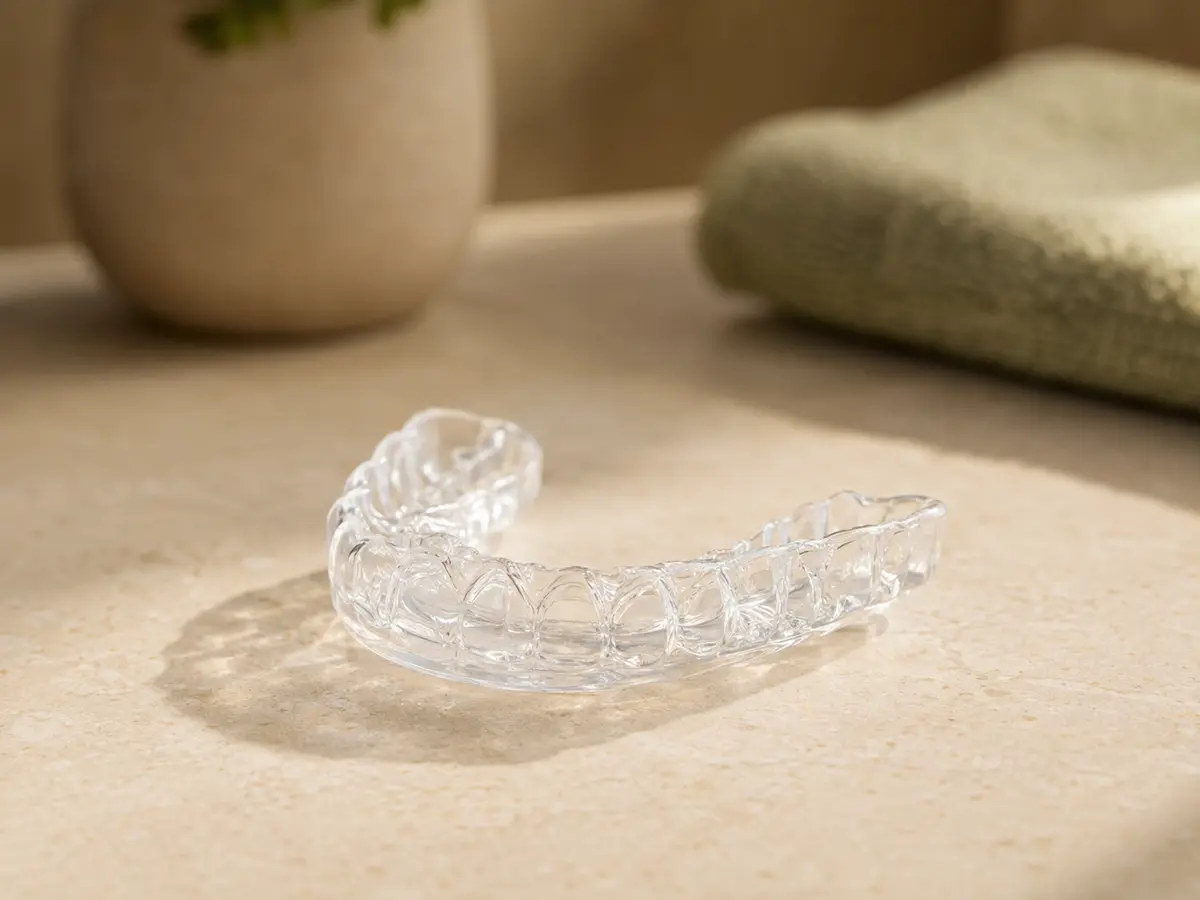
If you wake up with a tight jaw, dull headaches at your temples, or front teeth that look shorter and flatter than they used to, there's a good chance you grind or clench in your sleep. The clinical name is bruxism, and most people don't notice it themselves — a partner mentions the sound, or a dentist spots the wear during a checkup. A bite guard is a thin, custom piece of dental-grade acrylic that takes the force you'd otherwise put on your enamel, fillings, and jaw joints.
People come to Village Dental for guards from across the Triangle — Six Forks and North Hills, the Brier Creek and RTP side, Edwards Mill near the PNC Arena, and out toward Wake Forest. The reasons tend to rhyme: a tooth cracks, a crown works loose, or years of quiet wear finally show up on an X-ray. Whatever brings you in, the earlier a guard goes in, the less repair work tends to follow it.
We make more than one kind, too. Nighttime grinding guards are the most common, but we also build daytime clenching guards, TMJ stabilization splints, and custom sports mouthguards for contact athletes. The drugstore boil-and-bite version is bulky, slips overnight, and can make grinding worse by giving your jaw something to push against — a fitted guard is the opposite of that. See our four Raleigh-area locations to find the office closest to you.
No shots, no drilling, no recovery — the first visit takes about 30 to 45 minutes, and your finished guard is ready in one to two weeks.
We start with what you've been noticing — jaw soreness, sensitivity, a clicking joint — then check your teeth and bite for the wear patterns that point to grinding. If your symptoms lean toward TMJ, we cover that too.
A small wand captures a 3D scan of your upper and lower teeth in a few minutes. No gooey trays, no gagging — and you can watch the model build on the screen as we go.
Your guard comes back from the lab in one to two weeks. We seat it, smooth any high spots, and check that the bite feels even — then adjust again if anything feels off in the first week or two.
The whole reason a guard works is fit. A guard that rocks, pinches, or slides gets taken out at 2 a.m. — and then you grind anyway. We scan digitally rather than using traditional alginate trays for one practical reason: the scan is more accurate, and accuracy is what keeps the guard seated through the night instead of in the drawer.
During the exam we use intraoral cameras to put your teeth up on a screen, so you can see the wear for yourself. For a lot of people that's the moment a guard makes sense — the flattened edges on the back molars are hard to argue with. If your grinding ties into broken or worn teeth, we'll talk through whether a general dentistry repair needs to happen alongside the guard, and if dental anxiety is part of why you've waited, ask about sedation options.
Two things hold true at every Village Dental office. First, we quote the price in writing before we start, so you know the number walking in. Second, this is a judgment-free practice — whether your last cleaning was six months or six years ago, you're welcome, and plenty of our guard patients had been putting off the dentist until something finally cracked. We also keep same-day windows open daily, so the first scan can often happen quickly.
What you pay for a bite guard depends on the type — a thin nighttime grinding guard sits at the low end, while a heavy-duty TMJ splint or a layered sports mouthguard runs higher — plus the materials and whether insurance covers part of it. Many plans pay toward a custom occlusal guard when it's medically necessary. We give you a written estimate before any work starts and verify your benefits up front. Village Dental is in-network with the major dental insurance providers below.
Please note: We do not accept Medicaid. If you're uninsured, ask about the Village Dental Membership Plan — it bundles your preventive visits and gives you a discount on additional treatment, including bite guards and other care.
New patients: Your first exam and X-rays are free. If a guard has been on your list, that's an easy place to start.
Bite guards are made at all four Village Dental offices across the Raleigh area. Pick the location that's easiest for you — each page has that office's hours, directions, and online scheduling. Not sure which is closest? Browse all Village Dental locations.
Bite guard cost depends on the type — a thin nighttime grinding guard is the most affordable, while a heavy-duty TMJ splint or a layered sports mouthguard costs more. We give you a written estimate before any work starts, and many plans cover part of a medically necessary guard. We're in-network with Delta Dental Premier, Cigna PPO, BCBS Grid, and United Concordia Elite. Call (919) 205-4829 for an estimate.
All four of them. Village Dental makes custom night guards in-house at our Olde Raleigh, North Raleigh, Brier Creek, and Wake Forest offices, each using a digital scan instead of goopy trays. Pick whichever office is closest and book there directly. Call (919) 205-4829 or check all our locations to find the nearest one.
About one to two weeks start to finish. Your first visit — the digital scan and bite check — takes 30 to 45 minutes, then the scan goes to the lab. You come back for a short fitting visit where the bite is adjusted, and you wear the guard home that day. Call (919) 205-4829 to get on the schedule at any Village Dental office.
No. There's no drilling, no shots, and no anesthesia. We capture a digital scan with a small wand — no goopy impression trays — and the first visit runs about 30 to 45 minutes. At the fitting, adjusting the bite is just light polishing. Most patients are surprised by how easy the appointment is. Call (919) 205-4829 with any questions.
Often, yes. Many dental plans cover a portion of a medically necessary occlusal guard. We're in-network with Delta Dental Premier, Cigna PPO, Blue Cross Blue Shield Grid, and United Concordia Elite, and we verify your benefits before treatment so you know your out-of-pocket cost up front. We do not accept Medicaid. Call (919) 205-4829 with your insurance card handy.
For most people, yes. A custom guard is built from a scan of your exact teeth, so it stays put overnight, doesn't bulk up your bite, and lasts for years. Boil-and-bite guards are one-size-fits-most, tend to loosen, and can actually make grinding worse because your jaw fights a guard that won't sit still. Call (919) 205-4829 if the drugstore version isn't working for you.
A well-made custom guard usually lasts three to five years. Heavy grinders may wear through one in 12 to 24 months — which is the point, since that wear would otherwise land on your teeth, fillings, and crowns. We check your guard at routine cleanings. Call (919) 205-4829 if yours is cracking, thinning, or no longer fitting snugly.
A few common signs point to it: waking with a sore jaw or temple headaches, teeth that look flatter or shorter than they used to, new sensitivity, or a partner who hears grinding at night. Often the wear shows up during a routine exam before you notice it yourself. Call (919) 205-4829 to have it checked at any Village Dental location.
Yes. Village Dental makes custom sports mouthguards for football, lacrosse, basketball, wrestling, and other contact sports at our North Raleigh office on Six Forks Rd and our Brier Creek office off Brier Creek Pkwy, plus Olde Raleigh and Wake Forest. A custom guard fits and breathes better than the boil-and-bite kind. Call (919) 205-4829 to schedule.
It often helps. By cushioning the bite and easing the jaw into a more relaxed position, a stabilization splint can reduce muscle strain, morning soreness, and clicking in the joint. It isn't a fix for every TMJ case, but it's the least invasive starting point and the most common first step. Ask about it during a visit to any Village Dental office. Call (919) 205-4829 to be evaluated.